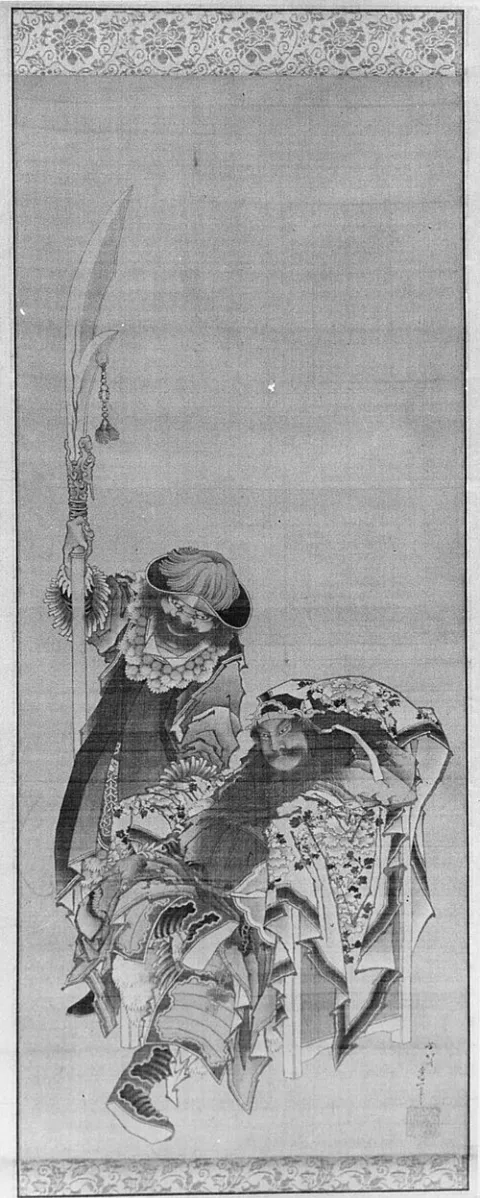
CIVILIZATION DOSSIER
Guan Yu关羽
Swore brotherhood in the Peach Garden, wielded the Green Dragon Crescent Blade, and slew Cheng Yuanzhi.
- DIRECT FIGURES
- 51
- RELATION RECORDS
- 91
- SOURCE WORKS
- 7
RELATIONSHIP COMPASS
Guan Yu, and the people around them.
Open one chapter at a time. Each chapter gives the relationship first, then the source text behind it.
01MENTORSHIPMentorship
Teachers, disciples and transmission
1 figure · 1 record+
Mentorship
Teachers, disciples and transmission
Guan Yu→Zhuge Liangadmire
02KINSHIPKinship
Blood, marriage and sworn bonds
3 figures · 5 records+
Kinship
Blood, marriage and sworn bonds
Liu Bei—Guan Yubrothers
Guan Yu—Zhang Feibrothers
Sun Quan—Guan Yumarriage alliance
03ALLEGIANCEAllegiance
Rulers, appointments and allegiance
5 figures · 7 records+
Allegiance
Rulers, appointments and allegiance
Liu BeiisGuan Yu’s ruler
Guan Yu—Cao Caosurrender general
Zhuge Liang→Guan Yuorder
04CONFLICTConflict
Battles, captures and defeat
14 figures · 20 records+
Conflict
Battles, captures and defeat
Sun Quan→Guan Yuambush kill
Cao Cao→Guan Yuwant surrender
Lu Meng→Guan Yucatch
05THE UNSEENMythic acts
Transformation, aid and divine punishment
5 figures · 7 records+
Mythic acts
Transformation, aid and divine punishment
Cao Cao→Guan Yugive horse
Guan Yu→Liu Beiappear
12 key relationships are shown here. The complete record remains below.
In history · Records of the Three Kingdoms · History of Song
A famous general of Shu Han, guarded Jingzhou, and was captured and killed by Lü Meng.
In fiction · Romance of the Three Kingdoms · Book of the Later Han · Extensive Records of the Taiping Era · New Book of Tang · The Story of Yue Fei
Swore brotherhood in the Peach Garden, wielded the Green Dragon Crescent Blade, and slew Cheng Yuanzhi. Sworn brother of Liu Bei, participated in quelling rebellions. Sworn brother of Liu Bei, slew Hua Xiong.
Across source works
How this figure changes across texts
Works are shown side by side, not as a chronology. No influence between texts is inferred.
- Official history1 profile notes
Book of the Later Han
0 relations0 verified quotations - Literature / legend54 profile notes
Romance of the Three Kingdoms
37 relations72 verified quotations- Guan Yu→ surrender general →Cao Cao
- Cao Cao→ want surrender →Guan Yu
- Cao Cao→ treat generously →Guan Yu
- Cao Cao→ give horse →Guan Yu
Verified original text · 72
吾今只降汉帝,不降曹操
surrender general · Romance of the Three Kingdoms, ch. 25
即写书一封,辞谢曹操
bid farewell · Romance of the Three Kingdoms, ch. 26
70 more verified quotations in the relationship records below.
- Official history43 profile notes
Records of the Three Kingdoms
15 relations27 verified quotations- Guan Yu→ surrender general →Cao Cao
- Cao Cao→ want surrender →Guan Yu
- Guan Yu→ sworn brothers →Liu Bei
- Liu Bei→ ruler-subject →Guan Yu
Verified original text · 27
曹公禽羽以归,拜为偏将军,礼之甚厚
receive favor · Records of the Three Kingdoms, 蜀书·关张马黄赵传
并禽关羽以归
catch · Records of the Three Kingdoms, 蜀书·先主传
25 more verified quotations in the relationship records below.
- Literature / legend1 profile notes
The Story of Yue Fei
0 relations0 verified quotations - Official history2 profile notes
History of Song
0 relations0 verified quotations - Literature / legend1 profile notes
Extensive Records of the Taiping Era
1 relations1 verified quotations- Guan Yu→ colleague →Zhang Fei
Verified original text · 1
二将俱不得其中,亦不得其死。
colleague · Extensive Records of the Taiping Era, 将帅一
- Official history1 profile notes
New Book of Tang
0 relations0 verified quotations
History vs. fiction
In official history, he was a famed general of Shu Han who shook the realm, while in the novel he is portrayed as the peerless warrior and paragon of loyalty, the Saintly Emperor Guan.
According to the Records of the Three Kingdoms, Book of Wu, Biography of Sun Po-ru, Hua Xiong was actually killed by Sun Jian; the Three Heroes' battle against Lü Bu is not recorded in official history, and in the Battle of Yangren, it was Sun Jian who defeated Lü Bu.
The Records of the Three Kingdoms, Book of Shu, Biography of Guan Yu records that when he left Cao Cao to return to Liu Bei, Cao Cao did not stop him; the geography of passing five passes is contradictory; the release of Cao Cao at Huarong Road is a fictional invention.
The Records of the Three Kingdoms, Book of Shu, Biography of Guan Yu records that Guan Yu took advantage of the rising Han River to capture Yu Jin alive and behead Pang De, shaking the realm, and Cao Cao even considered moving the capital.
Relationship network
To keep this page fast, the 40 most important records are shown here.View all 91 relationships in the atlas →
- surrender generalGuan Yu → Cao Caohist × litRecords of the Three Kingdoms, 蜀书·关张马黄赵传Romance of the Three Kingdoms, ch. 25Romance of the Three Kingdoms, ch. 26Romance of the Three Kingdoms, ch. 27
Original text (4)
吾今只降汉帝,不降曹操
即写书一封,辞谢曹操
Original relation: bid farewell · Romance of the Three Kingdoms, ch. 26
关某前曾禀过丞相
Original relation: ruler-subject · Romance of the Three Kingdoms, ch. 27
曹公禽羽以归,拜为偏将军,礼之甚厚
Original relation: receive favor · Records of the Three Kingdoms, 蜀书·关张马黄赵传
- want surrender← Cao Cao → Guan Yuhist × litRecords of the Three Kingdoms, 蜀书·先主传Records of the Three Kingdoms, 魏书·武帝纪Records of the Three Kingdoms, 魏书·程郭董刘蒋刘传Romance of the Three Kingdoms, ch. 24
Original text (3)
吾素爱云长武艺人材,欲得之以为己用
并禽关羽以归
Original relation: catch · Records of the Three Kingdoms, 蜀书·先主传
复进攻之,羽降。
Original relation: defeat · Records of the Three Kingdoms, 魏书·武帝纪
- treat generously← Cao Cao → Guan YulitRomance of the Three Kingdoms, ch. 25Romance of the Three Kingdoms, ch. 26Romance of the Three Kingdoms, ch. 77
Original text (3)
小宴三日,大宴五日
表奏朝廷,封云长为汉寿亭侯
Original relation: reward · Romance of the Three Kingdoms, ch. 26
葬以大臣之礼
Original relation: bury richly · Romance of the Three Kingdoms, ch. 77
- give horse← Cao Cao → Guan YulitRomance of the Three Kingdoms, ch. 25Romance of the Three Kingdoms, ch. 27Romance of the Three Kingdoms, ch. 50
Original text (3)
遂并鞍辔送与关公
锦袍一领,略表寸心
Original relation: 赠袍 · Romance of the Three Kingdoms, ch. 27
丞相昔日有恩于彼
Original relation: have favor · Romance of the Three Kingdoms, ch. 50
- want killGuan Yu → Cao CaolitRomance of the Three Kingdoms, ch. 20Romance of the Three Kingdoms, ch. 21
Original text (2)
云长大怒,剔起卧蚕眉,睁开丹凤眼,提刀拍马便出,要斩曹操
云长在玄德背后,挺刀欲杀操
Original text (1)
云长回身时,曹操已与众将过去了
Original text (1)
- sworn brothersGuan Yu → Liu Beihist × litRecords of the Three Kingdoms, 蜀书·先主传Romance of the Three Kingdoms, ch. 6Romance of the Three Kingdoms, ch. 7Romance of the Three Kingdoms, ch. 25Romance of the Three Kingdoms, ch. 27Romance of the Three Kingdoms, ch. 31Romance of the Three Kingdoms, ch. 60Romance of the Three Kingdoms, ch. 77
Original text (8)
八路诸侯,同请玄德、关、张贺功
刘玄德、关云长、张翼德
Original relation: 义弟 · Romance of the Three Kingdoms, ch. 7
当初刘使君与兄结义之时,誓同生死
吾乃刘玄德之弟关某也
Original relation: brothers · Romance of the Three Kingdoms, ch. 27
兄言差矣
Original relation: brothers · Romance of the Three Kingdoms, ch. 31
一将于马前施礼曰:“奉兄长将令,为大夫远涉风尘,令关某洒扫驿庭
Original relation: brothers · Romance of the Three Kingdoms, ch. 60
吾与刘皇叔桃园结义,誓扶汉室
等轻骑俱去
Original relation: sworn brothers · Records of the Three Kingdoms, 蜀书·先主传
- ruler-subject← Liu Bei → Guan Yuhist × litRecords of the Three Kingdoms, 吴书·周瑜鲁肃吕蒙传Records of the Three Kingdoms, 蜀书·关张马黄赵传Records of the Three Kingdoms, 蜀书·刘彭廖李刘魏杨传Records of the Three Kingdoms, 蜀书·诸葛亮传Records of the Three Kingdoms, 蜀书·邓张宗杨传Records of the Three Kingdoms, 蜀书·霍王向张杨费传Records of the Three Kingdoms, 魏书·武帝纪Records of the Three Kingdoms, 魏书·程郭董刘蒋刘传Romance of the Three Kingdoms, ch. 25Romance of the Three Kingdoms, ch. 26Romance of the Three Kingdoms, ch. 37Romance of the Three Kingdoms, ch. 42Romance of the Three Kingdoms, ch. 65Romance of the Three Kingdoms, ch. 73Romance of the Three Kingdoms, ch. 78
Original text (8)
羽少事皇叔,誓同生死
Original relation: follow · Romance of the Three Kingdoms, ch. 26
云长请玄德并甘夫人、阿斗至船中坐定
Original relation: protect · Romance of the Three Kingdoms, ch. 42
先主为平原相,以羽、飞为别部司马
关羽亡归刘备。
Original relation: submit · Records of the Three Kingdoms, 魏书·武帝纪
刘使君以家眷付托于兄
Original relation: 托付家眷 · Romance of the Three Kingdoms, ch. 25
玄德同关、张并从人等来隆中
关云长为荡寇将军、汉寿亭侯
Original relation: appoint · Romance of the Three Kingdoms, ch. 65
为五虎大将
- brothers← Liu Bei → Guan Yuhist × litRecords of the Three Kingdoms, 蜀书·先主传Records of the Three Kingdoms, 蜀书·庞统法正传Romance of the Three Kingdoms, ch. 1Romance of the Three Kingdoms, ch. 2Romance of the Three Kingdoms, ch. 5Romance of the Three Kingdoms, ch. 6Romance of the Three Kingdoms, ch. 15Romance of the Three Kingdoms, ch. 21Romance of the Three Kingdoms, ch. 22Romance of the Three Kingdoms, ch. 26Romance of the Three Kingdoms, ch. 28Romance of the Three Kingdoms, ch. 38
Original text (8)
三人焚香再拜而说誓
Original relation: sworn brothers · Romance of the Three Kingdoms, ch. 1
我三人义同生死
Original relation: sworn brothers · Romance of the Three Kingdoms, ch. 2
此关羽,张飞,备结义兄弟也
Original relation: sworn brothers · Romance of the Three Kingdoms, ch. 5
八路诸侯,同请玄德、关、张贺功
Original relation: sworn brothers · Romance of the Three Kingdoms, ch. 6
吾三人桃园结义,不求同生,但愿同死。
Original relation: sworn brothers · Romance of the Three Kingdoms, ch. 15
关、张侍立于侧
待弟往观其动静
备与足下,自桃园缔盟,誓以同死
Original text (1)
上帝以臣二人平生不失信义,皆敕命为神。
Original text (1)
玄德见了,慌忙摇手送目
- ambush kill← Sun Quan → Guan Yuhist × litRecords of the Three Kingdoms, 吴书·吴主传Records of the Three Kingdoms, 吴书·吴范刘惇赵达传Records of the Three Kingdoms, 吴书·潘浚陆凯传Records of the Three Kingdoms, 蜀书·先主传Records of the Three Kingdoms, 蜀书·刘二牧传Records of the Three Kingdoms, 魏书·和常杨杜赵裴传Records of the Three Kingdoms, 魏书·武帝纪Records of the Three Kingdoms, 魏书·王卫二刘傅传Records of the Three Kingdoms, 魏书·程郭董刘蒋刘传Romance of the Three Kingdoms, ch. 77Romance of the Three Kingdoms, ch. 80
Original text (8)
于是关公父子皆遇害
Original relation: capture and kill · Romance of the Three Kingdoms, ch. 77
不幸二弟云长,被东吴孙权所害。
Original relation: kill · Romance of the Three Kingdoms, ch. 80
获羽及其子平
Original relation: capture and kill · Records of the Three Kingdoms, 吴书·吴主传
权与吕蒙谋袭关羽
孙权杀关羽
Original relation: slay · Records of the Three Kingdoms, 吴书·潘浚陆凯传
孙权袭杀羽,取荆州
孙权杀关羽
Original relation: slay · Records of the Three Kingdoms, 蜀书·刘二牧传
孙权袭取羽辎重
Original relation: 袭取 · Records of the Three Kingdoms, 魏书·和常杨杜赵裴传
- refuse marriageGuan Yu → Sun Quanhist × litRecords of the Three Kingdoms, 蜀书·关张马黄赵传Records of the Three Kingdoms, 魏书·锺繇华歆王朗传Romance of the Three Kingdoms, ch. 73
Original text (3)
吾虎女安肯嫁犬子乎
权遣使为子索羽女,羽骂辱其使,不许婚
Original relation: fall out · Records of the Three Kingdoms, 蜀书·关张马黄赵传
后孙权袭取其将士家属,羽士众一旦瓦解
Original relation: attacked · Records of the Three Kingdoms, 魏书·锺繇华歆王朗传
Original text (1)
- order← Zhuge Liang → Guan YulitRomance of the Three Kingdoms, ch. 39Romance of the Three Kingdoms, ch. 49Romance of the Three Kingdoms, ch. 51Romance of the Three Kingdoms, ch. 63
Original text (4)
云长可引一千军往豫山之前
云长可于华容小路高山之处,堆积柴草,放起一把火烟,引曹操来
Original relation: 派遣守华容 · Romance of the Three Kingdoms, ch. 49
却教云长袭取了襄阳。
Original relation: dispatch · Romance of the Three Kingdoms, ch. 51
曰:“主公书中,把荆州托在吾身上,教我自量才委用。虽然如此,今教关平赍书前来,其意欲云长公当此重任
Original relation: entrust · Romance of the Three Kingdoms, ch. 63
- sign pledgeGuan Yu → Zhuge Lianghist × litRecords of the Three Kingdoms, 蜀书·关张马黄赵传Romance of the Three Kingdoms, ch. 49
Original text (2)
云长便与了军令状
羽书与诸葛亮,问超人才可谁比类
Original relation: colleague · Records of the Three Kingdoms, 蜀书·关张马黄赵传
- want behead← Zhuge Liang → Guan YulitRomance of the Three Kingdoms, ch. 50Romance of the Three Kingdoms, ch. 51
Original text (2)
Original text (1)
关、张下马拜伏于车前
Original text (1)
亮闻将军欲与孟起分别高下。以亮度之,孟起虽雄烈过人,不过黥布、彭越之徒耳;当与翼德并驱争先,犹未及美髯公之绝伦超群也。
Original text (1)
截住去路。当先一将,乃关云长也
- brothersGuan Yu → Zhang Feihist × litRecords of the Three Kingdoms, 蜀书·关张马黄赵传Romance of the Three Kingdoms, ch. 1Romance of the Three Kingdoms, ch. 25Romance of the Three Kingdoms, ch. 28Romance of the Three Kingdoms, ch. 63
Original text (5)
三人焚香再拜而说誓
Original relation: sworn brothers · Romance of the Three Kingdoms, ch. 1
吾弟张翼德于百万军中取上将之头
贤弟何故如此?岂忘了桃园结义耶?
云长想桃园结义之情
先主与二人寝则同床,恩若兄弟
- sworn brothers← Zhang Fei → Guan YulitRomance of the Three Kingdoms, ch. 15Romance of the Three Kingdoms, ch. 81
Original text (2)
吾三人桃园结义,不求同生,但愿同死。
昔我三人桃园结义,誓同生死
Original relation: brothers · Romance of the Three Kingdoms, ch. 81
Original text (1)
二将俱不得其中,亦不得其死。
Original text (1)
父亲知马超武艺过人,要入川来与之比试高低
Original text (1)
为首一员大将,乃关云长也。周瑜举止失措,急拨马便走
Original text (1)
- resistGuan Yu → Zhang LiaolitRomance of the Three Kingdoms, ch. 16Romance of the Three Kingdoms, ch. 18
Original text (2)
后面张辽赶来,关公敌住
云长从城上谓之曰:“公仪表非俗,何故失身于贼?”
Original relation: urge surrender · Romance of the Three Kingdoms, ch. 18
- persuade to surrender← Zhang Liao → Guan YulitRomance of the Three Kingdoms, ch. 24Romance of the Three Kingdoms, ch. 25
Original text (2)
某与关公有一面之交,愿往说之。
张辽劝我投降,我以三事相约
Original relation: urge surrender · Romance of the Three Kingdoms, ch. 25
- ask← Zhang Liao → Guan YulitRomance of the Three Kingdoms, ch. 26Romance of the Three Kingdoms, ch. 28
Original text (2)
操令张辽来探关公意。
云长、元让,休得争战
Original relation: mediate peace · Romance of the Three Kingdoms, ch. 28
Original text (1)
曹公使张辽及羽为先锋击之
Original text (1)
逊径进,领宜都太守,拜抚边将军,封华亭侯。
- catch← Lu Meng → Guan Yuhist × litRecords of the Three Kingdoms, 吴书·周瑜鲁肃吕蒙传Records of the Three Kingdoms, 吴书·嗣主传Records of the Three Kingdoms, 吴书·是仪胡综传Records of the Three Kingdoms, 蜀书·先主传Romance of the Three Kingdoms, ch. 76Romance of the Three Kingdoms, ch. 77
Original text (7)
蒙笑曰:“卦象正合某之机也。关公虽有冲天之翼,飞不出吾罗网矣!”
Original relation: hostile · Romance of the Three Kingdoms, ch. 76
吾料关某兵少,必不从大路而逃
Original relation: 设计擒 · Romance of the Three Kingdoms, ch. 77
即父子俱获,荆州遂定
蒙至寻阳,尽伏其精兵
Original relation: 袭取 · Records of the Three Kingdoms, 吴书·周瑜鲁肃吕蒙传
志报关羽之败
吕蒙图袭关羽
Original relation: raid · Records of the Three Kingdoms, 吴书·是仪胡综传
孙权袭杀羽,取荆州
Original relation: ambush kill · Records of the Three Kingdoms, 蜀书·先主传
Original text (1)
公大怒曰:“此奸贼之计也!我生不能杀此贼,死必杀之,以雪我恨!”
Original text (1)
我乃汉寿亭侯关云长也。
- battleGuan Yu → Cao Renhist × litRecords of the Three Kingdoms, 蜀书·关张马黄赵传Records of the Three Kingdoms, 魏书·和常杨杜赵裴传Romance of the Three Kingdoms, ch. 76
Original text (3)
原来是樊城曹仁闻曹操救兵至,引军杀出城来,与徐晃会合,两下夹攻。
羽率众攻曹仁于樊
关羽围征南将军曹仁于樊
Original relation: besiege · Records of the Three Kingdoms, 魏书·和常杨杜赵裴传
- shoot wound← Cao Ren → Guan Yuhist × litRecords of the Three Kingdoms, 魏书·任城陈萧王传Romance of the Three Kingdoms, ch. 74
Original text (2)
右臂上中一弩箭
曹仁为关羽所围
Original relation: besieged · Records of the Three Kingdoms, 魏书·任城陈萧王传
Original text (1)
Original text (1)
背后尘埃起处,一彪人马赶来。当先夏侯惇大叫
- defeat← Xu Huang → Guan Yuhist × litRecords of the Three Kingdoms, 魏书·张乐于张徐传Records of the Three Kingdoms, 魏书·武帝纪Romance of the Three Kingdoms, ch. 76
Original text (3)
言讫,挥大斧直取关公。公大怒,亦挥刀迎之,战八十馀合。
Original relation: battle · Romance of the Three Kingdoms, ch. 76
晃击之,退走
晃攻羽,破之