CIVILIZATION DOSSIER
King Zhou (Di Xin)纣王
The last monarch of the Shang dynasty, son of Di Yi, who brought disaster upon himself by writing a poem that blasphemed Nüwa.
- DIRECT FIGURES
- 65
- RELATION RECORDS
- 109
- SOURCE WORKS
- 11
RELATIONSHIP COMPASS
King Zhou (Di Xin), and the people around them.
Open one chapter at a time. Each chapter gives the relationship first, then the source text behind it.
01KINSHIPKinship
Blood, marriage and sworn bonds
5 figures · 6 records+
Kinship
Blood, marriage and sworn bonds
- Daji2
King Zhou (Di Xin)—Dajifavor
King Zhou (Di Xin)isYin Jiao’s father
Bi GanisKing Zhou (Di Xin)’s uncle
Jizi—King Zhou (Di Xin)relatives
02ALLEGIANCEAllegiance
Rulers, appointments and allegiance
11 figures · 17 records+
Allegiance
Rulers, appointments and allegiance
- Daji2
King Zhou (Di Xin)→Dajifavor
King Zhou (Di Xin)isSu Hu’s ruler
Wen Zhong→King Zhou (Di Xin)obey order
03CONFLICTConflict
Battles, captures and defeat
11 figures · 15 records+
Conflict
Battles, captures and defeat
Jiang Ziya→King Zhou (Di Xin)attack
- Jizi2
King Zhou (Di Xin)→Jiziimprison
King Zhou (Di Xin)→King Wen of Zhouimprison
04THE UNSEENMythic acts
Transformation, aid and divine punishment
2 figures · 2 records+
Mythic acts
Transformation, aid and divine punishment
King Wen of Zhou→King Zhou (Di Xin)prophesy
Yin Jiao→King Zhou (Di Xin)dream message
12 key relationships are shown here. The complete record remains below.
In history · Records of the Grand Historian
The youngest son of Di Yi, the last monarch of the Shang dynasty, tyrannical, imprisoned the Earl of the West, later burned himself to death, and was destroyed by King Wu of Zhou.
In fiction · Liezi · Book of the Later Han · Discourses of the States · Investiture of the Gods · Strategies of the Warring States · Researches into Lost Records · Correct Meaning of the Zuo Tradition · Songs of Chu · Book of Han · Bamboo Annals
The Son of Heaven of the Shang dynasty, who blasphemed Nüwa with a poem, favored Daji, harmed the loyal and virtuous, was dissolute and unjust, and died by self-immolation.
Across source works
How this figure changes across texts
Works are shown side by side, not as a chronology. No influence between texts is inferred.
- Literature / legend1 profile notes
Songs of Chu
0 relations0 verified quotations - Literature / legend45 profile notes
Investiture of the Gods
32 relations74 verified quotations- Jiang Ziya→ attack →King Zhou (Di Xin)
- King Zhou (Di Xin)→ interrogate →Jiang Ziya
- Jiang Ziya→ subordinate →King Zhou (Di Xin)
- King Zhou (Di Xin)→ order arrest →Jiang Ziya
Verified original text · 74
子牙曰:“臣启陛下,鹿台之工,劳民伤财,愿陛下息此念头
direct remonstrance · Investiture of the Gods, ch. 18
奉天明命,行天之罚
attack · Investiture of the Gods, ch. 95
72 more verified quotations in the relationship records below.
- Official history1 profile notes
Discourses of the States
0 relations0 verified quotations - Official history5 profile notes
Book of Han
0 relations0 verified quotations - Official history3 profile notes
Book of the Later Han
0 relations0 verified quotations - Literature / legend1 profile notes
Liezi
0 relations0 verified quotations - Official history14 profile notes
Records of the Grand Historian
9 relations11 verified quotations- King Zhou (Di Xin)→ imprison →King Wen of Zhou
- King Wu of Zhou→ attack →King Zhou (Di Xin)
- King Zhou (Di Xin)→ favor →Daji
- King Zhou (Di Xin)→ imprison →Jizi
Verified original text · 11
纣囚西伯羑里
imprison · Records of the Grand Historian, Annals of Yin
周武王伐纣克殷
attack · Records of the Grand Historian, 宋微子世家
9 more verified quotations in the relationship records below.
- Literature / legend2 profile notes
Researches into Lost Records
1 relations1 verified quotations- King Zhou (Di Xin)→ favor →Daji
Verified original text · 1
云是帝辛之枕,尝与妲己同枕之
同枕 · Researches into Lost Records, 卷七
- Official history1 profile notes
Strategies of the Warring States
0 relations0 verified quotations - Official history2 profile notes
Bamboo Annals
6 relations7 verified quotations- King Zhou (Di Xin)→ imprison →King Wen of Zhou
- King Zhou (Di Xin)→ pardon →King Wen of Zhou
- King Wu of Zhou→ attack →King Zhou (Di Xin)
- King Zhou (Di Xin)→ favor →Daji
Verified original text · 7
囚西伯于羑里
imprison · Bamboo Annals, 今本-殷纪
释西伯
release · Bamboo Annals, 今本-殷纪
5 more verified quotations in the relationship records below.
- Official history3 profile notes
Correct Meaning of the Zuo Tradition
0 relations0 verified quotations
TRACEABLE IMAGE ARCHIVE
Images across historical and literary reception
Each image keeps its source, licence and interpretive boundary. Later depictions are not presented as contemporary portraits.
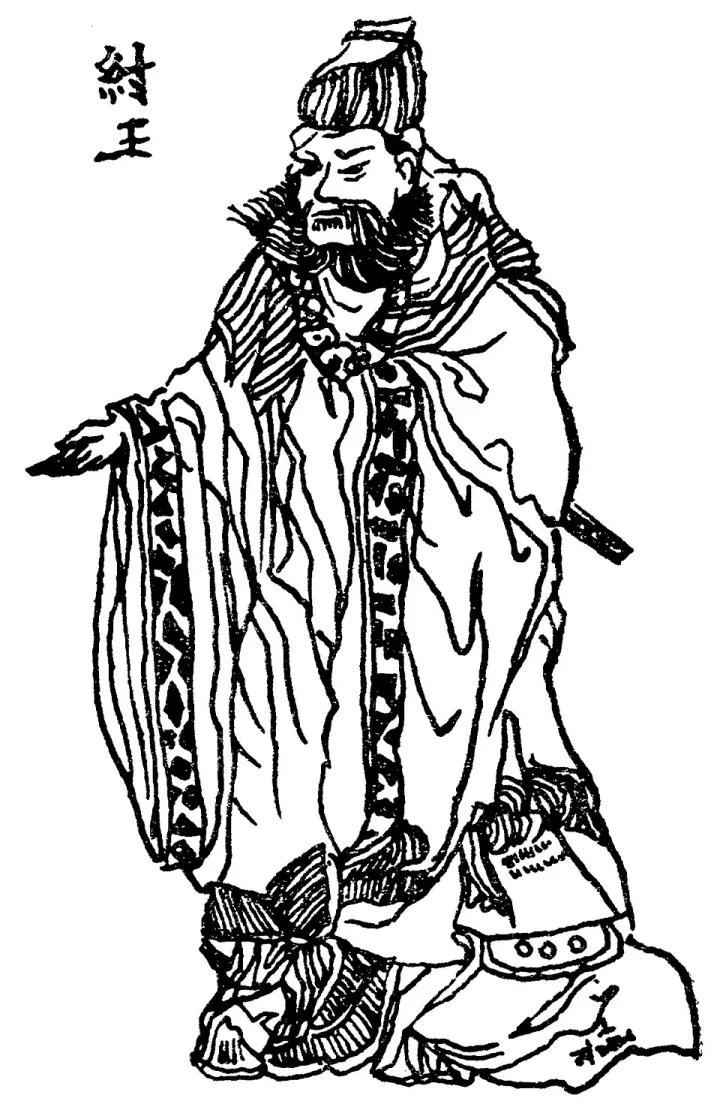
Literary image of King Zhou of Shang · 1963
A later literary image, not a contemporary documentary portrait
Teachers' Council of Thailand
History vs. fiction
In official histories, the last emperor of the Shang dynasty is depicted as a ruler who expanded territory but was autocratic and obstinate, while in novels he is portrayed as a tyrannical villain bewitched by a fox spirit.
- based on factThe cruel punishment of being burned to death on a bronze pillar and the pool of wine and forest of meat
The Records of the Grand Historian, 'Annals of Yin,' records that he used wine as a pool and hung meat as a forest; but the Analects, 'Zizhang,' quotes Zigong saying, 'The wickedness of Zhou is not as extreme as this,' suggesting many atrocities were later exaggerated.
The Book of Documents, 'Oath of Mu,' accuses him of 'heeding only the words of women'; but the primary causes of Shang's fall were the depletion of resources from campaigns against the Eastern Yi and internal divisions, not the bewitchment by a nine-tailed fox as in the novel.
The Records of the Grand Historian, 'Annals of Yin,' explicitly states that he was 'eloquent and quick of perception, with superior strength, able to fight beasts with bare hands,' confirming his extraordinary talents in both civil and martial arts.
Relationship network
To keep this page fast, the 40 most important records are shown here.View all 109 relationships in the atlas →
- attack← Jiang Ziya → King Zhou (Di Xin)litInvestiture of the Gods, ch. 18Investiture of the Gods, ch. 95Investiture of the Gods, ch. 98
Original text (3)
子牙曰:“臣启陛下,鹿台之工,劳民伤财,愿陛下息此念头
Original relation: direct remonstrance · Investiture of the Gods, ch. 18
奉天明命,行天之罚
子牙曰:“此铜柱乃是纣王所造炮烙之刑。”
- interrogateKing Zhou (Di Xin) → Jiang ZiyalitInvestiture of the Gods, ch. 16Investiture of the Gods, ch. 17
Original text (2)
纣王在九曲雕栏之外,王曰:“阶下俯伏何人?”
姜尚听朕封官:官拜下大夫
Original relation: appoint official · Investiture of the Gods, ch. 17
Original text (1)
此时成汤合灭,周室当兴;又逢神仙犯戒,元始封神,姜子牙享将相之福
Original text (1)
传旨命奉御官:“拿来!”
- rebel← Huang Feihu → King Zhou (Di Xin)litInvestiture of the Gods, ch. 30Investiture of the Gods, ch. 33
Original text (2)
黄飞虎反了,现在午门请战。
今纣王失政,弃纣归周。
- escortKing Zhou (Di Xin) → Huang FeihulitInvestiture of the Gods, ch. 1Investiture of the Gods, ch. 30
Original text (2)
武成王黄飞虎保驾
黄飞虎虽反,今日面君,尚有愧色。
Original relation: ruler-subject · Investiture of the Gods, ch. 30
Original text (1)
与镇国武成王黄飞虎抱本上殿
Original text (1)
武王对子牙曰:“纣王无道,残虐生灵
- imprisonKing Zhou (Di Xin) → King Wen of Zhouhist × litRecords of the Grand Historian, Annals of YinInvestiture of the Gods, ch. 11Investiture of the Gods, ch. 20Investiture of the Gods, ch. 22Bamboo Annals, 今本-殷纪
Original text (6)
暂居羑里
囚于羑里城
无故而羁囚羑里
纣囚西伯羑里
囚西伯于羑里
释西伯
Original relation: release · Bamboo Annals, 今本-殷纪
- pardonKing Zhou (Di Xin) → King Wen of ZhoulitInvestiture of the Gods, ch. 1Investiture of the Gods, ch. 2Investiture of the Gods, ch. 20Investiture of the Gods, ch. 22Bamboo Annals, 今本-殷纪
Original text (6)
西伯侯姬昌
Original relation: subordinate · Investiture of the Gods, ch. 1
特旨令二侯秉节钺,得专征伐。
Original relation: 命其征伐 · Investiture of the Gods, ch. 2
单赦姬伯老大人
加封贤良忠孝百公之长
Original relation: reward · Investiture of the Gods, ch. 20
蒙圣恩赦宥归国
命九侯、周侯、邘侯
Original relation: appoint · Bamboo Annals, 今本-殷纪
Original text (1)
前演陛下之数不吉
- obey order← Wen Zhong → King Zhou (Di Xin)litInvestiture of the Gods, ch. 5Investiture of the Gods, ch. 30Investiture of the Gods, ch. 41Investiture of the Gods, ch. 52Investiture of the Gods, ch. 53
Original text (5)
已令太师闻仲剿除奸党
太师听罢,厉声言曰……此一件事,据老臣愚见,还是陛下有负于臣子!
Original relation: remonstrate · Investiture of the Gods, ch. 30
太师要伐西岐,为孤代理。
Original relation: ruler-subject · Investiture of the Gods, ch. 41
老臣奉敕西征,屡战失利,枉劳无功,今已绝于西土
Original relation: admonish · Investiture of the Gods, ch. 52
闻太师的事奏启一遍
Original relation: subordinate · Investiture of the Gods, ch. 53
- attack← King Wu of Zhou → King Zhou (Di Xin)hist × litRecords of the Grand Historian, 宋微子世家Records of the Grand Historian, Annals of YinBamboo Annals, 古本辑校
Original text (3)
周武王伐纣克殷
周武王于是遂率诸侯伐纣
Original relation: attack · Records of the Grand Historian, Annals of Yin
王亲禽帝受辛于南单之臺
Original relation: catch · Bamboo Annals, 古本辑校
- orphan entrustKing Zhou (Di Xin) → Wen ZhonglitInvestiture of the Gods, ch. 1Investiture of the Gods, ch. 30
Original text (2)
托孤与太师闻仲
太师奏捷,乞与朕擒来,以正国法!
Original relation: ruler-subject · Investiture of the Gods, ch. 30
- favorKing Zhou (Di Xin) → Dajihist × litRecords of the Grand Historian, Annals of YinInvestiture of the Gods, ch. 5Investiture of the Gods, ch. 10Investiture of the Gods, ch. 62Researches into Lost Records, 卷七Bamboo Annals, 今本-殷纪
Original text (6)
纣王贪恋妲己,终日荒淫
宠妲己
御妻,汝父反朕
Original relation: spouse · Investiture of the Gods, ch. 62
爱妲己,妲己之言是从
云是帝辛之枕,尝与妲己同枕之
Original relation: 同枕 · Researches into Lost Records, 卷七
获妲己以归
- favorKing Zhou (Di Xin) → DajilitInvestiture of the Gods, ch. 4Investiture of the Gods, ch. 6Investiture of the Gods, ch. 7Investiture of the Gods, ch. 27Investiture of the Gods, ch. 28Investiture of the Gods, ch. 30
Original text (6)
天子同妲己在寿仙宫筵宴,当夜成就凤友鸾交
纣王见惊坏了妲己,慌忙无措
美人只管侍朕,明日便废了贱人,立你为皇后
Original relation: favor · Investiture of the Gods, ch. 7
听信妲己
纣王在御书阁陪苏妲己、胡喜媚共饮
纣王见有筵席,问曰……卿与何人饮酒?
- slander← Daji → King Zhou (Di Xin)litInvestiture of the Gods, ch. 7Investiture of the Gods, ch. 17Investiture of the Gods, ch. 66Investiture of the Gods, ch. 78Investiture of the Gods, ch. 89
Original text (5)
妲己乃美人
Original relation: concubine · Investiture of the Gods, ch. 7
妲己奏曰
Original relation: offer advice · Investiture of the Gods, ch. 17
妲己、胡喜妹、王贵人三人共席欠身
Original relation: serve · Investiture of the Gods, ch. 66
妲己笑而奏曰
妲己又曰:“陛下何不差官去拿来,便知端的。”
- concubine← Daji → King Zhou (Di Xin)litInvestiture of the Gods, ch. 15Investiture of the Gods, ch. 19Investiture of the Gods, ch. 25Investiture of the Gods, ch. 96
Original text (4)
此时因纣王失政,妲己残害生灵
纣王见妲己出来,口称
Original relation: concubine · Investiture of the Gods, ch. 19
纣王与妲己同坐七香车
有妲己、胡喜媚、王贵人三个前来接驾
- imprisonKing Zhou (Di Xin) → Jizihist × litRecords of the Grand Historian, Annals of ZhouRecords of the Grand Historian, Annals of YinBamboo Annals, 今本-殷纪
Original text (3)
Original text (1)
纣为淫泆,箕子谏,不听
Original text (1)
Original text (1)
箕子忙抱本来见纣王
Original text (1)
将箕子竟囚之为奴
- report← Weizi → King Zhou (Di Xin)litInvestiture of the Gods, ch. 29Investiture of the Gods, ch. 68Investiture of the Gods, ch. 87
Original text (3)
抱本来奏纣王
微子看本,知张山阵亡,洪锦归周,忙抱本入内庭,见纣王
微子接本看了,忙入内庭
Original text (1)
Original text (1)
殷帝乙之首子而帝纣之庶兄也
Original text (1)
Original text (1)
特敕尔前去,用心料理
- father-sonKing Zhou (Di Xin) → Yin JiaolitInvestiture of the Gods, ch. 1Investiture of the Gods, ch. 8Investiture of the Gods, ch. 9
Original text (3)
二位殿下殷郊、殷洪来参谒父王
父王听信妲己之言
今逆子殷郊,助恶殷洪
Original text (1)
见一人三首六臂,立于御前,口称:“父王
Original text (1)
著晁田、晁雷取龙凤剑,将二逆子首级取来
- ruler-subjectKing Zhou (Di Xin) → Bi GanlitInvestiture of the Gods, ch. 5Investiture of the Gods, ch. 19Investiture of the Gods, ch. 25Investiture of the Gods, ch. 26
Original text (4)
内有上大夫梅伯与首相商容、亚相比干言曰
Original relation: admonish · Investiture of the Gods, ch. 5
陛下!西伯侯姬昌子伯邑,考纳贡代父赎罪
Original relation: report · Investiture of the Gods, ch. 19
比干抱本往摘星楼来候旨。
比干奏曰:“鹿台高接霄汉,风雪严冬,臣忧陛下龙体生寒,特献袍袄
- order suicideKing Zhou (Di Xin) → Bi Ganhist × litRecords of the Grand Historian, Annals of YinInvestiture of the Gods, ch. 26Investiture of the Gods, ch. 27
Original text (3)
如不从朕命,武士,拿下去,取了心来!
取比干心作羹
Original relation: 剖心 · Investiture of the Gods, ch. 27
剖比干,观其心
Original relation: 剖杀 · Records of the Grand Historian, Annals of Yin
Original text (1)
比干乃昏君位之嫡叔
Original text (1)
遣使命持诏往三山关来
- summonKing Zhou (Di Xin) → Su HulitInvestiture of the Gods, ch. 2Investiture of the Gods, ch. 56Investiture of the Gods, ch. 62
Original text (3)
即命随侍官传旨:“宣苏护。”
即令军政官……速发黄旄、白钺
Original relation: appoint · Investiture of the Gods, ch. 56
苏护乃朕心腹之臣
Original relation: ruler-subject · Investiture of the Gods, ch. 62
- ruler-subjectKing Zhou (Di Xin) → Su HulitInvestiture of the Gods, ch. 4Investiture of the Gods, ch. 57
Original text (2)
犯臣苏护,死罪!死罪!
特敕尔冀州侯苏护
Original text (1)
命奉御官:“将此匹夫剜去二目!
Original text (1)
苏护反商,题诗午门,甚辱朝纲,情殊可恨,法纪难容。
Original text (1)
敢以戆言忤旨,面折朕躬