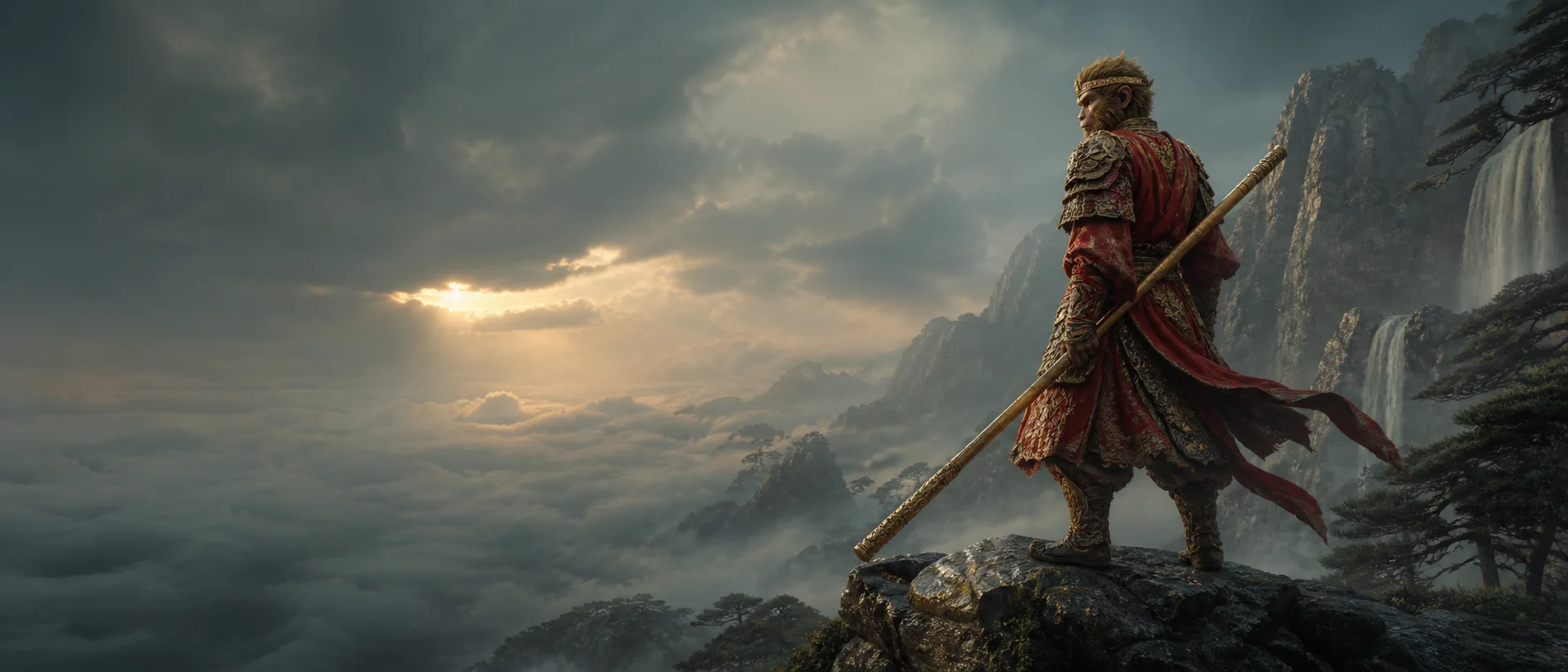
CIVILIZATION DOSSIER
Sun Wukong (Monkey King)孙悟空
The Monkey King in the Journey to the West mythology, who after wreaking havoc in Heaven, accompanied Tang Sanzang on the pilgrimage to the West and ultimately became the Victorious Fighting Buddha.
- DIRECT FIGURES
- 142
- RELATION RECORDS
- 198
- SOURCE WORKS
- 1
RELATIONSHIP COMPASS
Sun Wukong (Monkey King), and the people around them.
Open one chapter at a time. Each chapter gives the relationship first, then the source text behind it.
01MENTORSHIPMentorship
Teachers, disciples and transmission
3 figures · 5 records+
Mentorship
Teachers, disciples and transmission
Tang Sanzang (Tripitaka)isSun Wukong (Monkey King)’s teacher
Sun Wukong (Monkey King)—Zhu Bajie (Pigsy)fellow disciple
Sun Wukong (Monkey King)—Sha Wujing (Friar Sand)fellow disciple
02KINSHIPKinship
Blood, marriage and sworn bonds
2 figures · 4 records+
Kinship
Blood, marriage and sworn bonds
Sun Wukong (Monkey King)—Zhu Bajie (Pigsy)fellow disciple
Sha Wujing (Friar Sand)—Sun Wukong (Monkey King)fellow disciple
03ALLEGIANCEAllegiance
Rulers, appointments and allegiance
1 figure · 2 records+
Allegiance
Rulers, appointments and allegiance
Sun Wukong (Monkey King)→Jade Emperormemorialize
04CONFLICTConflict
Battles, captures and defeat
7 figures · 12 records+
Conflict
Battles, captures and defeat
Tang Sanzang (Tripitaka)→Sun Wukong (Monkey King)banish
Sun Wukong (Monkey King)→Taishang Laojunsteal elixir
Sun Wukong (Monkey King)—Yang Jianbattle
05THE UNSEENMythic acts
Transformation, aid and divine punishment
8 figures · 17 records+
Mythic acts
Transformation, aid and divine punishment
Guanyin→Sun Wukong (Monkey King)urge goodness
Tathagata Buddha→Sun Wukong (Monkey King)press under mountain
Read the original source
被佛祖翻掌一扑,把这猴王推出西天门外,将五指化作金、木、水、火、土五座联山,唤名“五行山”,轻轻的把他压住。
Sun Wukong (Monkey King)→Taishang Laojunseek elixir
12 key relationships are shown here. The complete record remains below.
In fiction · Journey to the West
Sun Wukong was born from a magical stone, proclaimed himself the Handsome Monkey King on the Mountain of Flowers and Fruit, and later studied under Patriarch Subhuti, learning the seventy-two transformations and the somersault cloud. He stormed the Dragon Palace to obtain the Golden Cudgel, caused havoc in the Underworld to erase his name from the Book of Life and Death, and after being recruited by Heaven, rebelled because he found the title too low, declaring himself the Great Sage Equal to Heaven. After wreaking havoc in Heaven, he was suppressed by the Buddha under the Five Elements Mountain, and following Guanyin's guidance, accompanied Tang Sanzang on the pilgrimage, enduring eighty-one tribulations, and was finally enfeoffed as the Victorious Fighting Buddha.
TRACEABLE IMAGE ARCHIVE
Images across historical and literary reception
Each image keeps its source, licence and interpretive boundary. Later depictions are not presented as contemporary portraits.
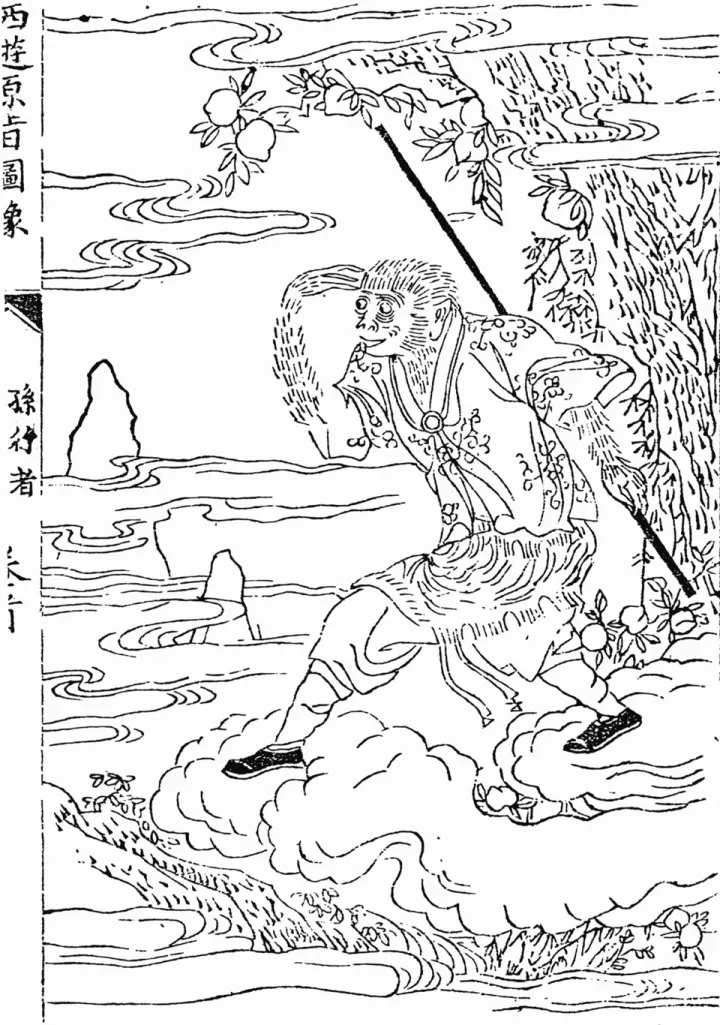
Literary image of Sun Wukong · 19 世纪
A later literary image, not a contemporary documentary portrait
Anonymous
History vs. fiction
The image of Sun Wukong is purely a fictional creation, with no such person in history.
In Chapter 001 of "Journey to the West", Sun Wukong is depicted as born from a magical stone on Mount Huaguo and causing havoc in Heaven. However, in "The Great Tang Records on the Western Regions" and official histories, Xuanzang's journey to the West was undertaken alone, without such a powerful monkey disciple, which is entirely fictional. Original text: "我原有个法名,叫做孙悟空。" (Chapter 014 of "Journey to the West")
Relationship network
To keep this page fast, the 40 most important records are shown here.View all 198 relationships in the atlas →
- master-disciple← Tang Sanzang (Tripitaka) → Sun Wukong (Monkey King)litJourney to the West, ch. 14Journey to the West, ch. 15Journey to the West, ch. 16Journey to the West, ch. 17Journey to the West, ch. 18Journey to the West, ch. 19Journey to the West, ch. 20Journey to the West, ch. 21Journey to the West, ch. 22Journey to the West, ch. 23Journey to the West, ch. 24Journey to the West, ch. 26Journey to the West, ch. 27Journey to the West, ch. 31Journey to the West, ch. 32Journey to the West, ch. 33Journey to the West, ch. 34Journey to the West, ch. 36Journey to the West, ch. 38Journey to the West, ch. 39Journey to the West, ch. 40Journey to the West, ch. 50Journey to the West, ch. 54
Original text (8)
我与你起个法名,却好呼唤。
Original relation: take disciple · Journey to the West, ch. 14
他是我的徒弟。
三藏道:“悟空,今日怎生区处?”
三藏道:“徒弟,如今天色又晚,却往那里安歇?”
行者遂领师父上了大路
三藏道:“既如此,就依你说,与你三日之限
做了我的徒弟
道:“徒弟们仔细,前遇山高,恐有虎狼阻挡。”
- banish← Tang Sanzang (Tripitaka) → Sun Wukong (Monkey King)litJourney to the West, ch. 27Journey to the West, ch. 28
Original text (2)
写了一纸贬书,递于行者
把我逐赶回来,写立贬书为照
Original relation: 逐赶 · Journey to the West, ch. 28
Original text (2)
抡铁棒,丢了磁杯,望长老脊背上砑了一下。
把两个青毡包袱提在手中,驾斤斗云,不知去向。
Original relation: 抢行李 · Journey to the West, ch. 57
Original text (1)
唐僧见了,更不答应,兜住马,即念紧箍儿咒。
Original text (1)
- urge goodness← Guanyin → Sun Wukong (Monkey King)litJourney to the West, ch. 8Journey to the West, ch. 14Journey to the West, ch. 15Journey to the West, ch. 18Journey to the West, ch. 22Journey to the West, ch. 42Journey to the West, ch. 55Journey to the West, ch. 58Journey to the West, ch. 100
Original text (7)
待我到了东土大唐国寻一个取经的人来,教他救你。
Original relation: 许诺 · Journey to the West, ch. 8
将杨柳叶儿摘下三个,放在行者的脑后
Original relation: give treasure · Journey to the West, ch. 15
行者辞了菩萨,按落云头,将袈裟挂在香柟树上
Original relation: assist · Journey to the West, ch. 18
菩萨道:“那流沙河的妖怪,乃是卷帘大将临凡,也是我劝化的善信
Original relation: guide · Journey to the West, ch. 22
菩萨叫:“悟空,伸手过来。”
Original relation: assist · Journey to the West, ch. 42
菩萨道:“你去东天门里光明宫告求昴日星官,方能降伏。”
Original relation: guide · Journey to the West, ch. 55
蒙观音菩萨劝善
- ask for helpSun Wukong (Monkey King) → GuanyinlitJourney to the West, ch. 26Journey to the West, ch. 43Journey to the West, ch. 49Journey to the West, ch. 57Journey to the West, ch. 75Journey to the West, ch. 84
Original text (4)
行者笑道:“我那乖乖,菩萨恐你养不大,与你戴个颈圈镯头哩。”
行者道:“我上普陀岩拜问菩萨,看这妖怪是那里出身……
我且向普陀崖告诉观音菩萨去来。
慌得倒身下拜,叫道:“菩萨,弟子失迎,失迎。”
Original relation: pay respects · Journey to the West, ch. 84
- enlighten← Guanyin → Sun Wukong (Monkey King)litJourney to the West, ch. 15Journey to the West, ch. 27Journey to the West, ch. 57Journey to the West, ch. 94
Original text (3)
度得个取经人来,叮咛教他救你性命
幸观音菩萨与我受了戒行
观音教令脱天灾
- fellow discipleSun Wukong (Monkey King) → Zhu Bajie (Pigsy)litJourney to the West, ch. 23Journey to the West, ch. 38Journey to the West, ch. 63Journey to the West, ch. 76Journey to the West, ch. 82Journey to the West, ch. 85
Original text (6)
行者道:“兄弟,自从有了你与沙僧,我又不曾挑著,那知多重?”
行者道:“兄弟,二更时分了。”
道:“兄弟不必多疑,还像刚才引出来,等我打他。”
哥哥,你实是那怪吃了,你、你怎么又活了?
道:“温柔天下去得,刚强寸步难移
Original relation: teach · Journey to the West, ch. 82
八戒不要忙,老孙来了
- subjugateSun Wukong (Monkey King) → Zhu Bajie (Pigsy)litJourney to the West, ch. 18Journey to the West, ch. 19Journey to the West, ch. 30Journey to the West, ch. 32
Original text (4)
行者急上前,掣铁棒,望风打了一下。
行者喝一声道:“泼怪!你是那里来的邪魔?
行者大怒,叫:“拿将来!”
Original relation: tease · Journey to the West, ch. 30
好大圣,你看他弄个虚头,把眼揉了一揉,揉出些泪来。
Original relation: 捉弄 · Journey to the West, ch. 32
- fellow discipleSun Wukong (Monkey King) → Zhu Bajie (Pigsy)litJourney to the West, ch. 22Journey to the West, ch. 34
Original text (2)
你去时,千万与我上覆一声
哥哥啊,耳朵吃不成了
- fellow disciple← Zhu Bajie (Pigsy) → Sun Wukong (Monkey King)litJourney to the West, ch. 31Journey to the West, ch. 58
Original text (1)
八戒跪在地下道:“哥啊,我不曾骂你
Original text (1)
八戒笑道:“师父,莫怕,莫怕。
Original text (1)
你趁早儿驾云回上花果山,请大师兄孙行者来
Original text (1)
Original text (1)
哪吒太子把皂旗拨喇喇展开
Original text (1)
被他著了一下,负痛逃走。
- injure← Taishang Laojun → Sun Wukong (Monkey King)litJourney to the West, ch. 6Journey to the West, ch. 7
Original text (2)
可可的著猴王头上一下
老君领旨去讫。一壁厢宣二郎显圣
Original relation: 炉中锻炼 · Journey to the West, ch. 7
- steal elixirSun Wukong (Monkey King) → Taishang LaojunlitJourney to the West, ch. 5Journey to the West, ch. 6
Original text (2)
他就把那葫芦都倾出来,就都吃了
又偷老君仙丹
- seek elixirSun Wukong (Monkey King) → Taishang LaojunlitJourney to the West, ch. 39Journey to the West, ch. 52
Original text (2)
万望道祖垂怜,把九转还魂丹借得一千丸儿
就教孙悟空上离恨天兜率宫太上老君处寻他的踪迹
Original relation: ask for help · Journey to the West, ch. 52
Original text (1)
我把这还魂丹送你一丸罢。
Original text (1)
又被那太上老君拿了我去,放在八卦炉中,将神火锻炼
- capture← Yang Jian → Sun Wukong (Monkey King)litJourney to the West, ch. 6Journey to the West, ch. 7
Original text (2)
被七圣一拥按住,即将绳索捆绑
后观世音举二郎真君同他义兄弟追杀,他变化多端,亏老君抛金钢琢打中,二郎方得拿住。
Original text (2)
真君与大圣斗经三百馀合
此山被显圣二郎神率领那梅山七弟兄,放火烧坏了
Original relation: 被烧山 · Journey to the West, ch. 28
Original text (1)
二郎笑道:“我因闲暇无事,同众兄弟采猎而回。幸蒙大圣不弃留会,足感故旧之情。若命挟力降妖,敢不如命
Original text (1)
行者道:“但内有显圣大哥,我曾受他降伏,不好见他。你去拦住云头,叫道:‘真君,且略住住,齐天大圣在此进拜。’
Original text (1)
这猴一路行凶,不可数计。
- fellow disciple← Sha Wujing (Friar Sand) → Sun Wukong (Monkey King)litJourney to the West, ch. 31Journey to the West, ch. 58
Original text (1)
沙僧一闻“孙悟空”的三个字,好便似醍醐灌顶
Original text (1)
沙僧道:“朝士休怪丑陋,我等乃是生成的遗体。
Original text (1)
被行者抡起铁棒,望那怪著头一下
Original text (1)
又看见行者,道:“这个主子,是他的帮手,好不利害,我不去了。”
- fellow discipleSun Wukong (Monkey King) → Sha Wujing (Friar Sand)litJourney to the West, ch. 23Journey to the West, ch. 76
Original text (1)
行者道:“兄弟,自从有了你与沙僧,我又不曾挑著,那知多重?”
Original text (1)
次又解了八戒、沙僧
- appoint groom← Jade Emperor → Sun Wukong (Monkey King)litJourney to the West, ch. 4Journey to the West, ch. 5
Original text (3)
玉帝传旨道:“就除他做个弼马温罢。”
玉帝道:“那孙悟空过来,今宣你做个齐天大圣,官品极矣,但切不可胡为。”
Original relation: 封齐天大圣 · Journey to the West, ch. 4
玉帝道:“朕见你身闲无事,与你件执事:你且权管那蟠桃园
Original relation: 封为 · Journey to the West, ch. 5
- memorializeSun Wukong (Monkey King) → Jade EmperorlitJourney to the West, ch. 51Journey to the West, ch. 87Journey to the West, ch. 94
Original text (3)
行者朝上唱个大喏道……老官儿,累你,累你
特来朝见玉帝请旨。
Original relation: 请旨 · Journey to the West, ch. 87
官拜齐天大圣
Original relation: confer title · Journey to the West, ch. 94
Original text (1)
玉帝闻言道:“这厮这等这等,如何处治?”
Original text (1)
那厮嫌恶官小,反了天宫
- guide← Tathagata Buddha → Sun Wukong (Monkey King)litJourney to the West, ch. 52Journey to the West, ch. 58
Original text (2)
如来即令十八尊罗汉开宝库,取十八粒金丹砂,与悟空助力
你自快去保护唐僧来此求经罢。
- press under mountain← Tathagata Buddha → Sun Wukong (Monkey King)litJourney to the West, ch. 7Journey to the West, ch. 27
Original text (2)
被佛祖翻掌一扑,把这猴王推出西天门外,将五指化作金、木、水、火、土五座联山,唤名“五行山”,轻轻的把他压住。
被如来压在石匣之内
Original relation: suppress · Journey to the West, ch. 27
Original text (1)